
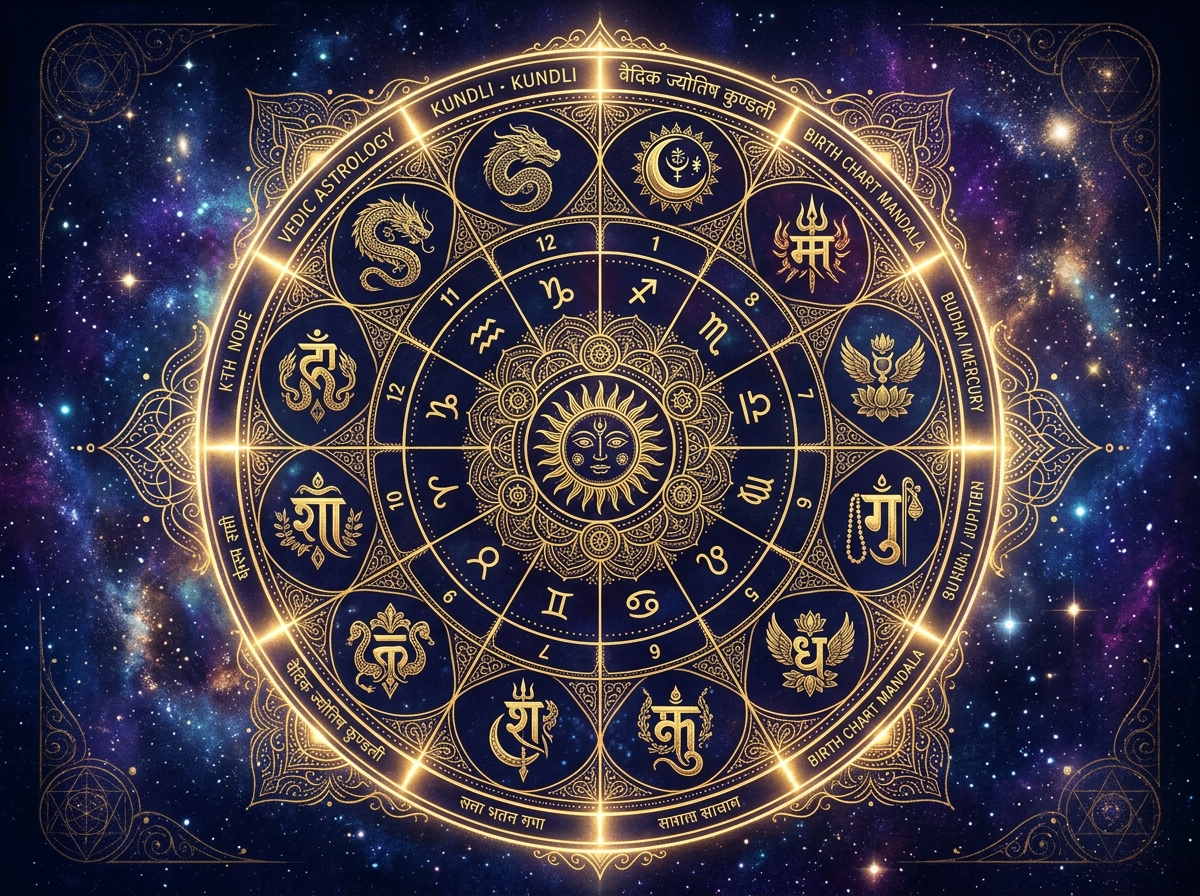
In classical Vedic Jyotish, Rahu (the Dragon’s Head) and Ketu (the Dragon’s Tail) are known as Chhaya Grahas (shadow planets). Unlike physical planetary bodies like Jupiter or Mars, they represent the astronomical intersection points of the orbital paths of the Sun and the Moon. Symbolically and energetically, they hold the profound narrative of your soul's karmic evolution.
The Gift of Ketu: Past Life Mastery
Wherever Ketu is placed in your Janam Kundli, it represents territories you have thoroughly mastered across multiple lifetimes. For instance, Ketu in the 10th house often creates individuals with innate executive authority, yet a psychological detachment from worldly fame. Ketu teaches us surrender, detachment, and spiritual liberation (Moksha).
The Urge of Rahu: Your Evolutionary Frontier
Directly opposite Ketu sits Rahu—the insatiable cosmic hunger driving you into new experiences. Rahu indicates the uncharted territories of consciousness your soul contracted to explore in this incarnation. If Rahu resides in your 4th house, your karmic homework is to cultivate true inner emotional peace, family sanctuary, and maternal connection.
"Do not fear the shadowy nodes. Ketu provides your spiritual roots; Rahu provides the branches reaching toward divine experiential wisdom." — Namitaa Sharma
Through conscious awareness and dedicated remedial practices (such as charity on Saturdays, chanting the sacred Maha Mrityunjaya mantra, and cultivating mindfulness), the erratic turbulence of Rahu-Ketu transforms into luminous spiritual breakthrough.